The Discipline Gap: Why Motivation Fails in January
 Jan 21, 2026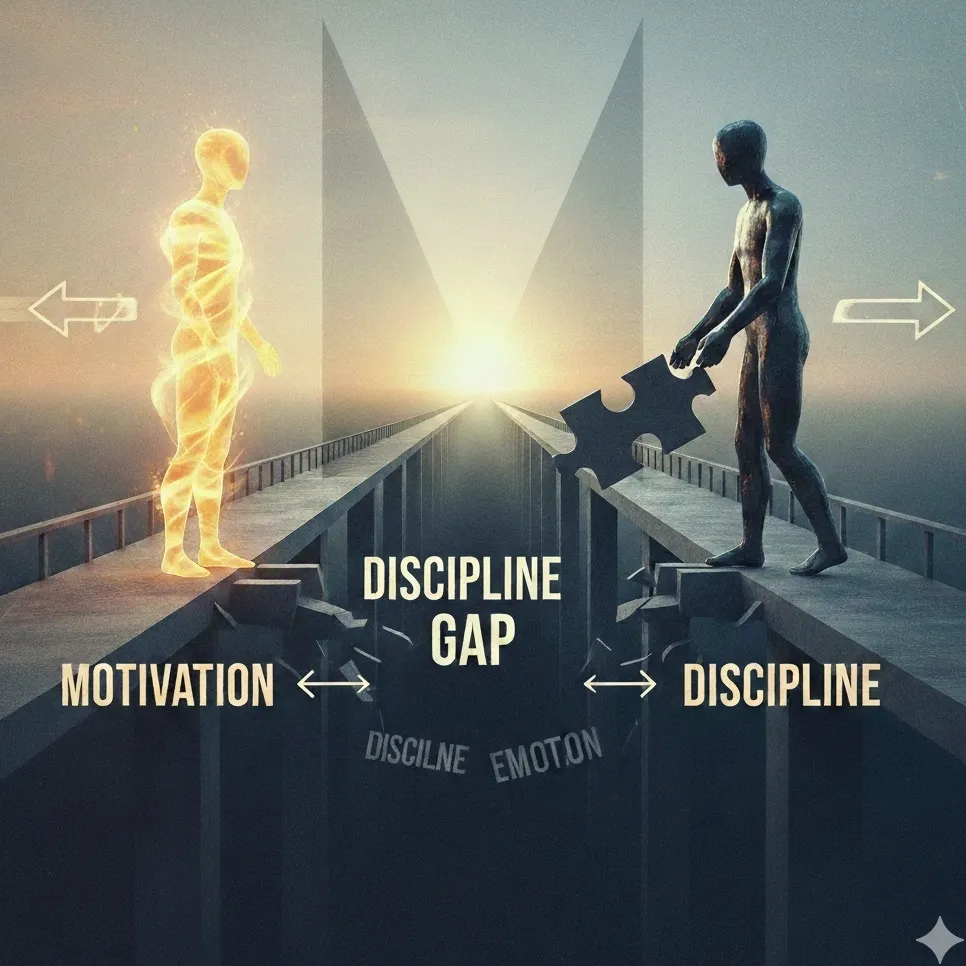
Motivation gets you to the starting line, but discipline gets you to the finish
January starts loud. New goals. Fresh intentions. Big promises to ourselves.
And then, quietly, motivation fades.
By mid-January, many people are already questioning why they don’t feel the same energy they had on January 1st. The excitement has worn off, routines feel harder to maintain, and progress feels slower than expected. This is where most resolutions stall.
Not because people don’t want change — but because they misunderstand what actually creates it.
Motivation Is a Short-Term Tool
Motivation is emotional. It’s influenced by novelty, excitement, and external pressure. It works well at the beginning of something new, but it was never designed to carry you through the long middle.
When people rely on motivation alone, progress becomes conditional.
They act when they feel inspired and pause when they don’t.
That’s not a character flaw. It’s human nature.
But it’s also why motivation fails so many people in January.
The Discipline Gap
The real difference between people who follow through and those who don’t isn’t willpower. It’s discipline.
Discipline isn’t punishment or rigidity. It’s structure.
It’s deciding in advance what you’ll do, then following through regardless of how you feel in the moment.
The discipline gap shows up when:
- Goals are clear, but action is inconsistent
- Intentions are strong, but habits aren’t defined
- Desire exists, but systems don’t
Without discipline, motivation becomes unreliable. With discipline, motivation becomes optional.
Why Discipline Feels Harder Than Motivation
Motivation feels good. Discipline often doesn’t.
Discipline asks you to show up when it’s boring, inconvenient, or uncomfortable. It requires you to act without emotional reinforcement. And because there’s no immediate reward, it’s easy to avoid.
But discipline is also what creates self-trust.
Every time you do what you said you would do, even when you don’t feel like it, you reinforce the belief that you can rely on yourself. That belief compounds over time.
Structure Over Feelings
If you want January goals to survive beyond January, structure has to replace emotion.
That might look like:
- Scheduling non-negotiable time for priorities
- Reducing decisions by creating routines
- Tracking progress instead of relying on mood
- Simplifying goals so they’re realistic and repeatable
Discipline isn’t about doing more. It’s about doing the right things consistently.
Discipline Creates Momentum
Here’s the paradox: discipline often feels heavy at first, but it creates momentum that motivation never could.
When action becomes automatic, resistance fades. When progress becomes visible, confidence grows. And when confidence grows, motivation often returns — not as the driver, but as a byproduct.
You don’t wait to feel ready. You act, and readiness follows.
Final Thought
Motivation will always come and go.
Discipline stays.
If January hasn’t felt as energized as you hoped, that doesn’t mean you’re failing. It means you’re standing at the point where real growth begins.
Close the discipline gap. Build the structure. Show up anyway.
That’s how change lasts.
Keep moving forward,
Stephen